
Luxury Joinery with Mixed Materials
9 min read
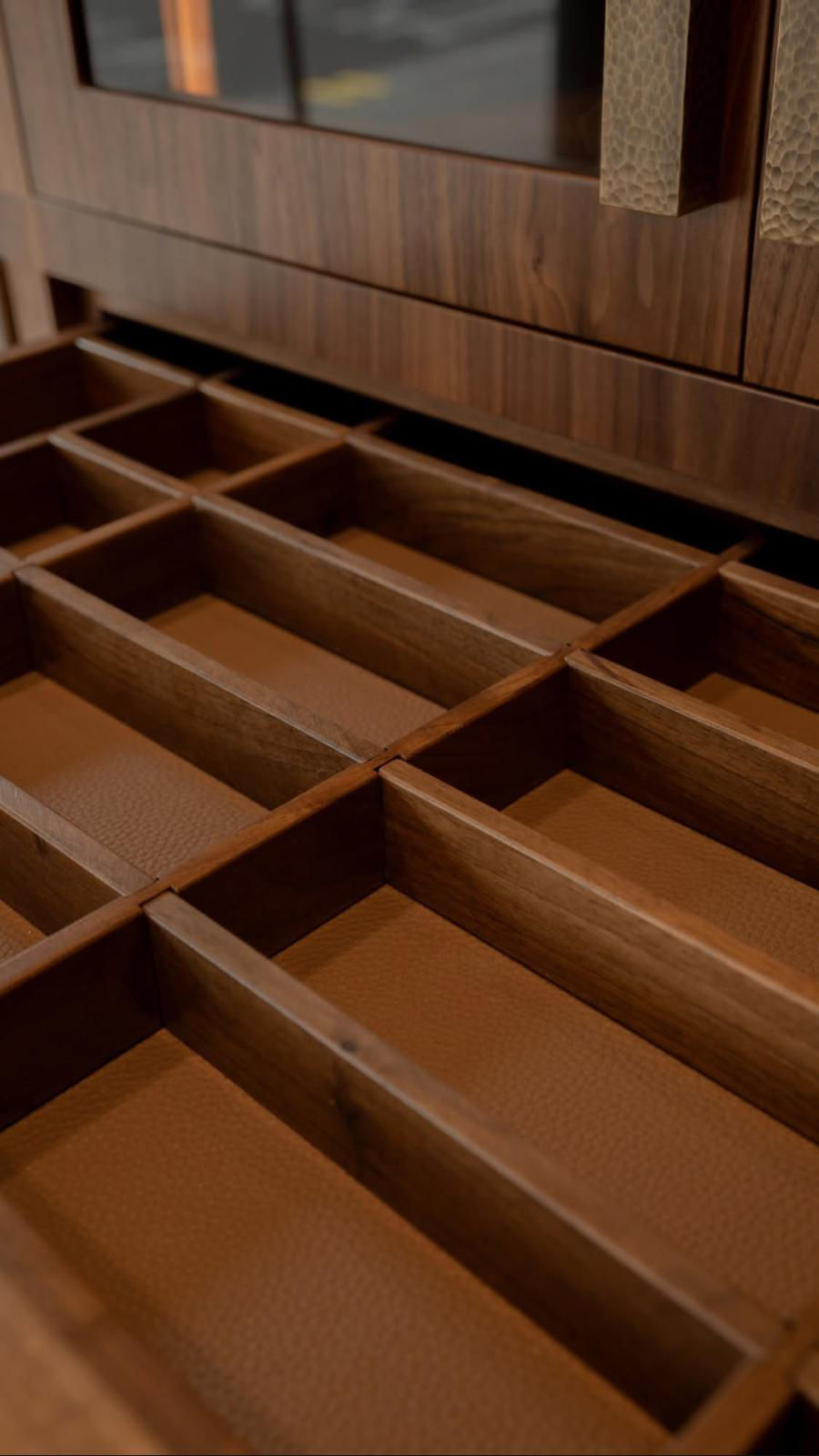
Modern luxury joinery is no longer defined by timber alone. While fine hardwoods remain the structural backbone of custom cabinetry, the most captivating contemporary interiors emerge when timber is thoughtfully combined with tactile metals, cold-cast liquid bronzes, and rich textural accents.
At Cochrane Bespoke, integrating mixed materials into architectural joinery allows us to create dynamic, layered spaces that balance industrial precision with organic warmth.

The Palette of Tactile Luxury
Combining contrasting materials requires an understanding of expansion rates, surface patinas, and visual balance. Below are the core materials transforming modern joinery design:
Material | Application & Characteristics | Ideal Pairing |
Stained American Walnut | Deep, rich grain with chocolate and espresso undertones; provides organic grounding. | Brushed Brass, Antique Bronze |
Liquid Bronze Finishes | Real cold-cast bronze resin sprayed onto detailed timber panels; forms a rich, metallic skin. | Fluted Glass, Dark Hardwoods |
Solid Brushed Brass | Warm, architectural metal used for inlay strips, perimeter framing, and custom handles. | Ebonized Oak, Calacatta Marble |
Fluted & Smoked Glass | Textured glass that diffuses interior cabinet lighting while softly obscuring contents. | Integrated LED Racks, Dark Joinery |
Key Mixed-Material Joinery Techniques
Integrating non-timber elements into solid joinery requires specialized engineering techniques to account for structural movement and thermal contraction.
1. Flush Brass Inlay Strips
Precision-routing a 3mm to 6mm channel into walnut or ebonized oak doors allows solid brass strips to be embedded flush with the timber surface. The result is a crisp, linear detail that catches the light across tall library walls or master dressing room doors.
2. Liquid Metal Feature Panels
Liquid metal technology involves combining real metal powders with a liquid binder, spraying the mixture over profiled MDF or timber, and hand-polishing the cured surface. This creates seamless, lightweight metallic cupboard fronts, feature alcoves, and island end-panels with the authentic weight, chill, and patination of cast bronze or copper.
3. Integrated Metallic Hardware Rails
The secret to successful mixed-material joinery is proportion. Metal and glass should act as refined accents that highlight the natural depth of timber, rather than overpowering it.
● Contrast High-Gloss with Matte: Pair cold-cast liquid metal or polished brass with ultra-matte, hand-rubbed timber finishes to create visual depth.
● Incorporate Concealed Lighting: Recessed LED strips (2,700K warm white) placed behind brass lip channels or beneath bronze-clad shelving reflect a warm glow across metallic surfaces, turning a joinery wall into a focal point after dark.
Frequently Asked Questions
Will brass and bronze inlays tarnish over time?
Unlacquered brass and bronze develop a natural, characterful patina through daily use and atmospheric exposure. If a consistent appearance is preferred, we can apply a protective clear lacquer coating to lock in the initial polished or brushed finish.
Is liquid bronze durable enough for high-use areas like kitchens?
Yes. Once fully cured and sealed, liquid bronze surfaces offer exceptional durability, water resistance, and UV stability, making them suitable for kitchen island wraps, bar fronts, and feature joinery panels.
Can mixed-material joinery be integrated into period properties?
Incorporate brass inlays or stained walnut alongside traditional panelling or shaker profiles to bridge the gap between heritage architecture and modern luxury—adding contemporary refinement without clashing with Victorian or Edwardian proportions.
5 Key Takeaways
1. Tactile Complexity: Combining fine hardwoods with metals, glass, and resins creates visually layered, contemporary joinery.
2. Precision Integration: Structural techniques like flush brass routing account for timber movement while preserving crisp lines.
3. Liquid Metal Innovation: Cold-cast liquid bronze provides real metallic depth and patination without the extreme weight of solid metal.
4. Lighting Synergies: Concealed 2,700K LED lighting accentuates metallic highlights and deep wood grains.
5. Architectural Balance: Mixed-material accents complement both contemporary open-plan spaces and classic period properties.


